
I want to talk about a few things with this post. But I feel like I need to start with this: I have never really liked the word emo.
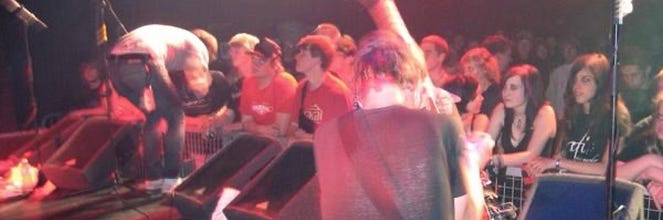
Not as a description, and not aimed at me, which it was back in the day, typically by people who meant it as a slight. This happened sometimes at shows when we would talk before or after a song or collapse from playing, or simply how we showed up.
And now, thirty years on, here we are. Numero Group (we love you!) reissued Eldritch Anisette’s music and the word is right there in how they describe it. We played California in June and people were coming up to us talking about second wave emo, meaning us. It’s in the posts, it’s in the comments, it’s in the way people find the band now. In fact, someone told JD that we are both second wave emo and fifth wave emo which is second wave emo renaissance. Or something like that. It wasn’t just Eldritch Anisette. Network 34 was labeled screamo. A lot of other bands growing up were too. I remember Boysetsfire when they first launched were named emo too.
I spent a long time refusing the label, but I think it just waited me out.
So I want to work out what the word, for me, actually names. Not what it got used for. What it names.
The clearest version of it I have found is not a punk record.
It took place on a train.
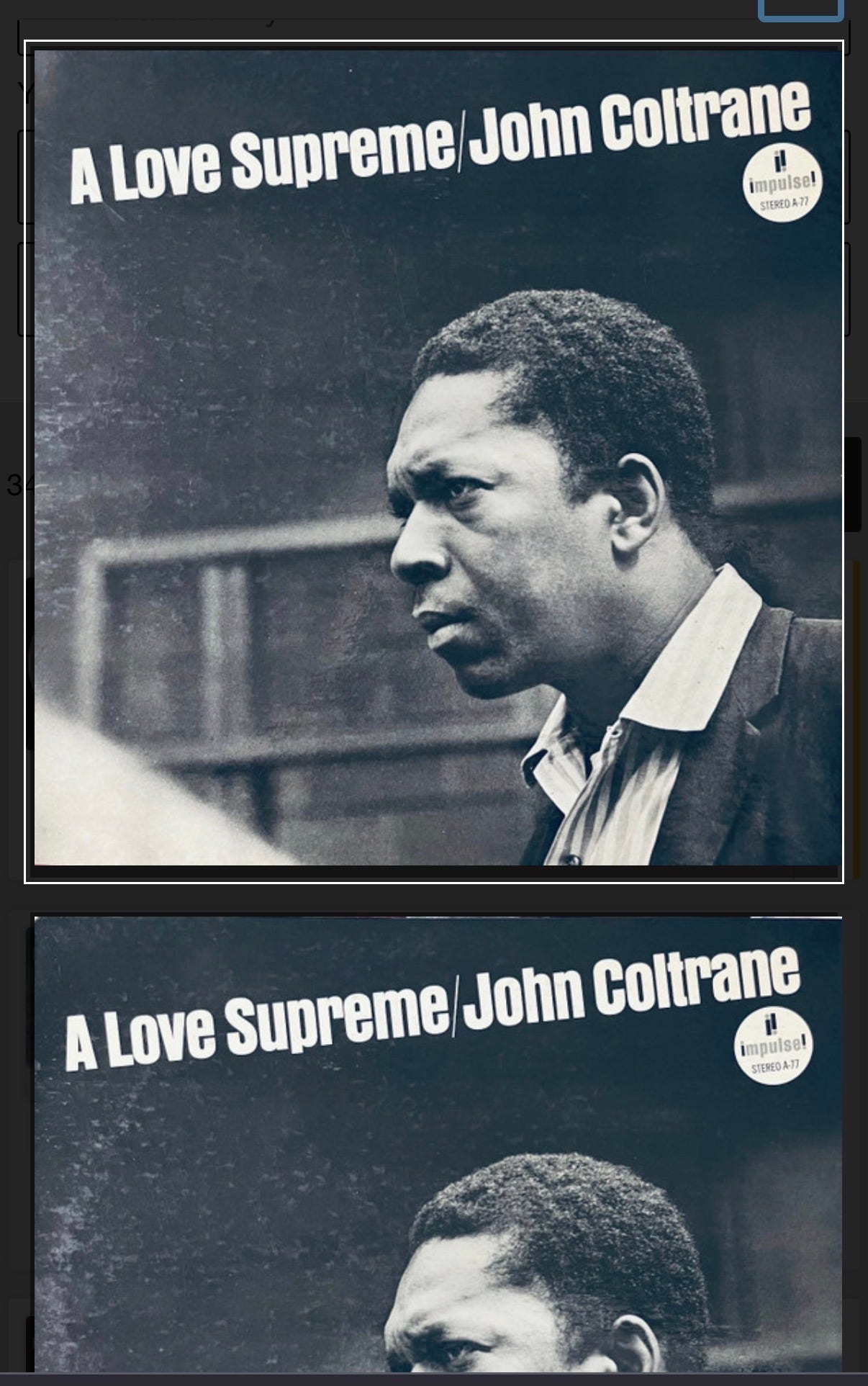
This was early during my jazz deep dive, the one I started in 2023 and still haven’t come out of. Morning commute, headphones on, eyes closed. A Love Supreme by John Coltrane and his classic quartet playing. I wasn’t listening with any intent. It was simply on. I hadn’t read the Coltrane books yet. I hadn’t yet taken the class on Elvin Jones’s drumming. I had read a memoir of Ahmed Abdullah, who played with Sun Ra, and the big Robin D.G. Kelley biography on Thelonious Monk. I had taken classes on Mingus (taught by his son, Eric) and on South African jazz and more, but I hadn’t yet plunged into Coltrane. In part, maybe I knew I was making my way there, that it was a summit I had to make my way to, and wanted to do so carefully and with some sense of direction first. I had not even read the liner notes of the record. Honestly. It was just on.
I was going about my commute, in that half morning fog when “Psalm” came on. The fourth and last track of A Love Supreme.
At the risk of sounding absurd (I may have jumped the shark on that already in this blog, I’m afraid), I’m going to describe it how I felt it.
What struck me initially was the emotion. It swelled from inside me. It wasn’t just within my ears, or my head. It came up from my chest and outside of me. I felt a radiant light around me. The music was a yearning and an imploring praise. It was a call. And it was also its response. Warm and assuring. Dimly aware that I was in a public space, I felt in the depth of me that this was mystical music. It is searching a connection with the oneness of God. You could hear Coltrane pulling from within himself and searching it out in breathy riffs and melodies rising with an emotion that was deep. The notes on his saxophone searching a certain point, faltering at times from fragility, and other times resounding with assurance.
Underneath him, Jones, Garrison, and Tyner built a kind of sonic embrace around the horn. Not just an environment. A support structure, with texture, rolling calls that push away clouds. A cleansing, making room for the offering. The rolling sound of Jones’ mallets on his timpani, Tyner playing arpeggios and chords as raindrops falling, Garrison’s bass as the raindrops falling into puddles. But each of them together creating a break, the eye in the middle of a storm, where the sun emerges behind the clouds to send warmth and light on an earth alive with life.
I was on a train full of midtown commuters. I opened my eyes, still in this state for a few seconds. I saw everyone else on my train car, and felt a closeness. And then, rather abruptly, I realized I had gone somewhere else. That another part of me was tapped into. I felt embarrassed and a bit silly. I am sure no one around me noticed anything, and thankfully in this case everyone else is always in their own world (and yet we always think we’re the center of everyone else’s), but it felt like a sense of vulnerability. Exposure. I became self-aware and realized what was happening, and took a breath.
I remember I quickly texted my friend chat group: Coltrane is emo music. I got some laughs in response. But I meant it. Never mind Sunny Day Real Estate, Indian Summer, Still Life, Rites of Spring, The Promise Ring, Embrace, Mineral, etc. The crown jewel of emo is John Coltrane’s A Love Supreme.
So what do I mean by emo? Because by the definition most people use, what I just said probably sounds like nonsense. And to some extent I am taking liberties and yes, having some fun, but hear me out.
Most definitions are about subject matter. Feelings, diaries, relationships, the specific pain of being nineteen. Or they’re about orchestration. Loud parts and quiet parts, a certain guitar tone, a voice that cracks on purpose, the scream in the bridge. Sometimes, emo is defined more about fashion aesthetic: stark eyeliner, swooping plastered hair styles usually jet black, accessories, tight clothing, painted fingernails. Derisively it means someone weak, too sensitive, overly wrought, and self-obsessed. By any of these, a 1964 jazz suite by a 38-year-old man on saxophone about his relationship with God is not in the conversation.
To me, though, 30 years after the label got thrown at me, I’ve understood that’s not really what emo is.
It may be my bias as a musician, but for me, when I think about emo, what I care about is the way instruments, including voice, get used and songs get built to carry something. How the people playing them are using them almost like divining rods. Where the playing and the writing are doing the work of communicating deep emotion. Where vulnerability is presented as strength. Where the point is authentic self-realization. Not for mere performance or attention but an inner searching. Getting to something true in yourself. And then, releasing it, exposed, until it reaches whoever is listening and the emotion turns into a shared thing. And then, while it’s being played, it belongs to everybody in the room, players and listeners both, at that moment.
Which, actually, is a definition I already wrote down a few posts back, but just didn’t call it emo at the time.
Over a month ago I published a piece about my brother Matt, who died in March, and about the song I wrote after my parents called to say he’d been moved to the ICU, and then what happened when Eldritch Anisette played it at our reunion shows. What I said on that stage, before I fell apart trying to play it, was that music is a vessel. Something that can hold your emotions, that you express into and then hand to other people. That it isn’t only self-expression, it’s collective experience. That it holds whatever you put in it and that the music changes shape as other people touch it.
That’s it.
But there’s an obvious objection to that definition. If emo is just music that carries deep feeling and hands it to a room, then nearly everything is emo. Adele is emo. Celine Dion is emo. At this point, the word stops meaning anything.
So, I’ll narrow it, and do so by going back to when it was bandied about in the mid-90s.
Emo isn’t only feeling but feeling showing up in music where the scene resisted it. The feeling in music has to cost something. It has to break a rule that the scene around it is enforcing. That’s why the hardcore kids I came up around used the word as a put down, or as dismissal, and not simply a genre tag. I remember when Eldritch played a show with Deadguy and Damnation where the crowd (not the bands, they were great) wanted it tougher, and some heckled, “stop being so emo.” Of course, a large part of this was that a woman was on the microphone, telling these guys things they didn’t want to hear. Or when Boysetsfire played Columbus Fest and similar barbs were tossed at them when they talked about songs that dealt with abuse and trauma rather than just playing. Or simply when anyone showed feeling and had to quickly follow it up with “sorry, I’m being so emo.” People apologizing in advance for their own emotions. That apology is at the heart of it, a scene that trained people to apologize for feeling. You had a scene built on toughness and armor and aggression, and then somebody stands up in the middle of it and is feeling out loud. This time without apologizing. That’s it. Not the sadness or whatever it may be, but the authenticity of being human when authenticity wasn’t allowed.
Which is exactly why most emotional music doesn’t qualify, and why this record does. Pop has always let you feel big, so there is nothing transgressive about a ballad or a torch song. But Coltrane made naked spiritual devotion at a moment when that was not the register jazz was reaching for. Unguarded devotion was not the dominant pose; the prestige was in complexity (e.g., bebop), or detachment (e.g., cool jazz), not in someone laying themself bare. He was too much for his context in the same way a band with a girl singer and excavated feelings was too much for a hardcore show in 1996 or for Rites of Spring in the middle of the ‘80’s Revolution Summer. It’s the emotion arriving where it wasn’t welcome.
Now, the other obvious objection. There are no guitars on this record. Certainly no distorted guitars. And for the most part, no vocals, let alone screaming! “It’s jazz!”
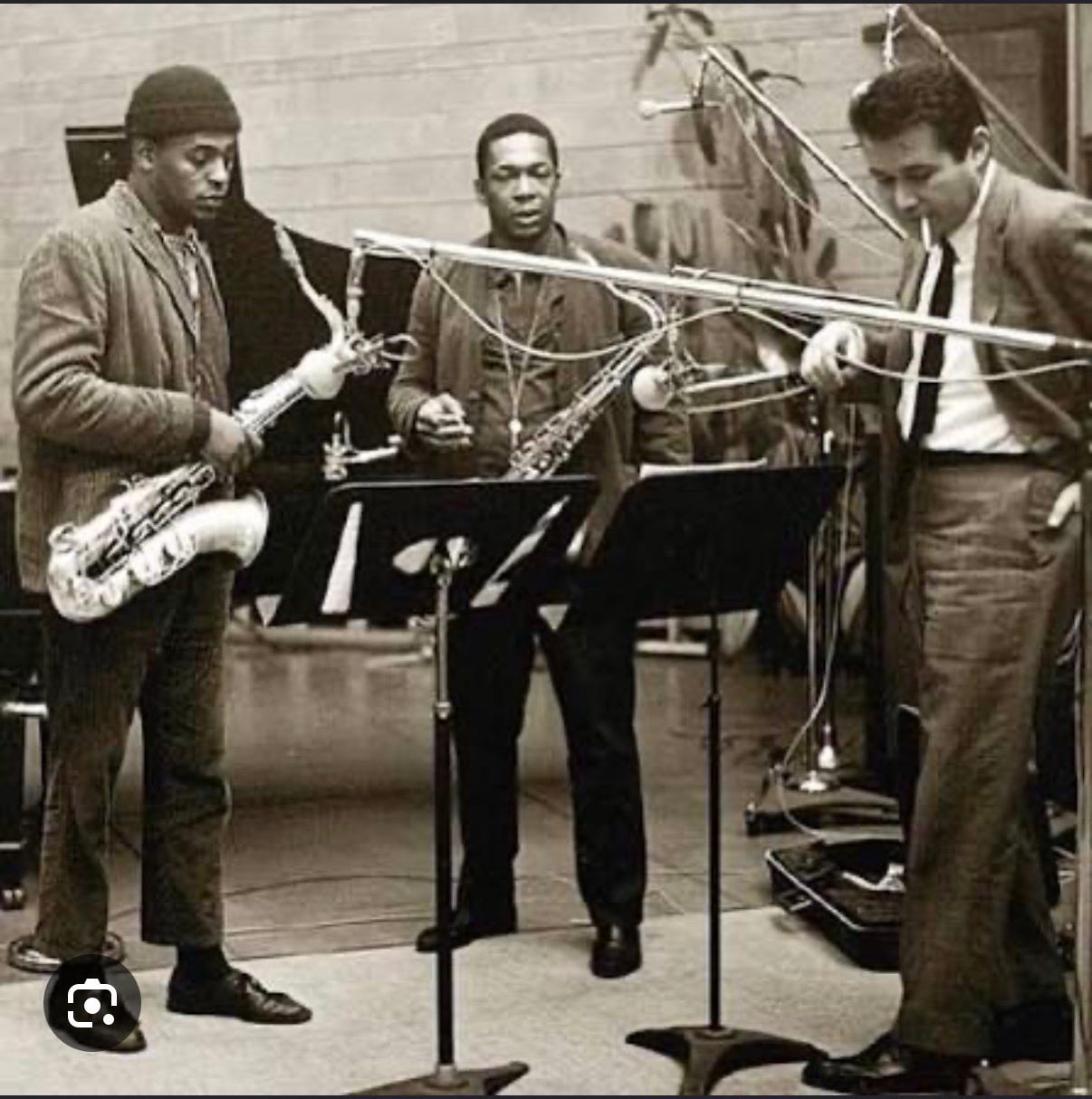
Never mind all that. Honestly, I think the Quartet could do it with whatever instruments they were handed.
Coltrane’s sax carries the drive and power, and it’s the one that screams and sings. And it presents the dynamics too, as there’s a tenderness in it too, found in whispers, like a low song sung to yourself when you’re alone and your voice is all you can hear. Put headphones on (please listen to it with headphones on) and you can hear his slight over-breath on the lower register, which is to say you can hear his being in the room. It’s not overly produced. You can tell there’s a living, breathing person behind all of this. Meanwhile, the rest of the Quartet do their parts as well. Tyner’s keys give the pieces a melodic and syncopated voicing that keeps everything alive and fresh. Garrison’s bass runs rhythmic melodies, including the famous, hypnotic ostinato lines, underneath it. And Elvin Jones is pure fireworks. He pulls in styles from across the African diaspora and makes them his own, riding soft and behind the beat one moment and driving the next. Musical percussion. He would be a perfect fit for any screamo band.
Put Jones and Garrison together and you get a rhythm section that flows and bends. With enough practice, a trained musician can play to a click. And well, of course a computer can too. What may seem like an imperfection in tempo is actually the song’s respiration. The breath in the rhythm and melody including the accidental rim shots or Coltrane’s over-breath can’t be faked. It is evidence of a living, feeling body doing this. It’s the same reason a technically flawed take can beat a clean one. Across all the performances, there is authenticity at the level of tempo and tone.
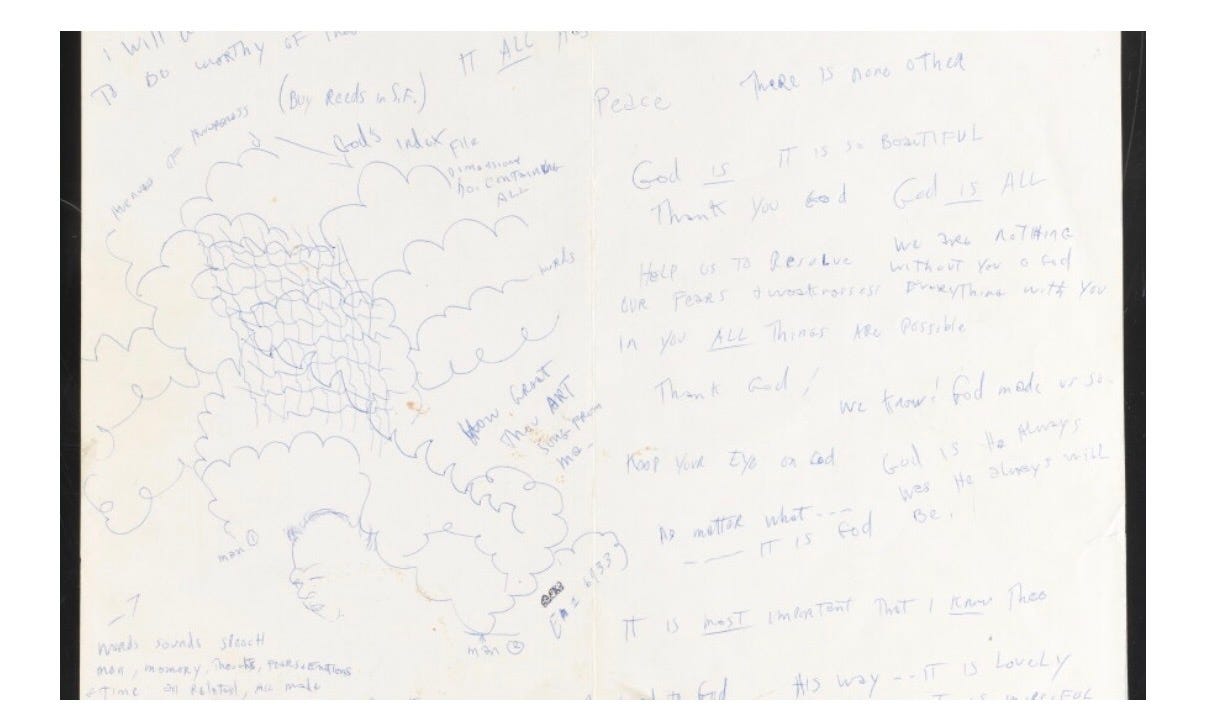
As it turns out, Coltrane’s horn playing on “Psalm,” the track that hit me on the train, is his delivery of the poem he included on the inner sleeve. The emotionality and intention in A Love Supreme is not just in the sound. Coltrane wanted to make it explicit by expressing it in words as well. His writing accompanying the album, reminds me of many “emo” record inserts, or even more, the zines that emerged around the same time in the mid-90s, featuring poetry, short stories, and visual art as another layer to the music being made. Meanwhile, Coltrane took his poem and recited it through his saxophone.
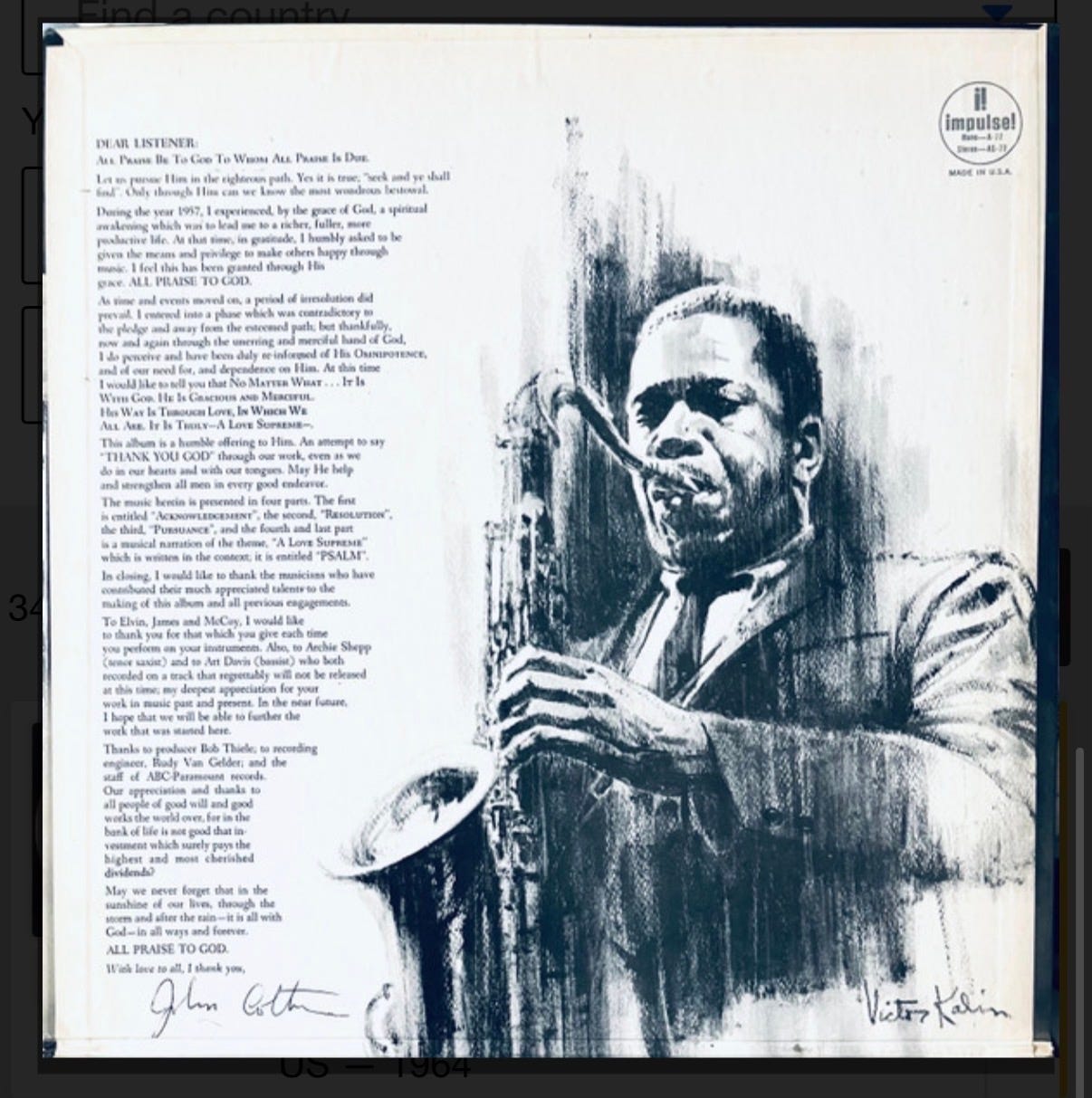
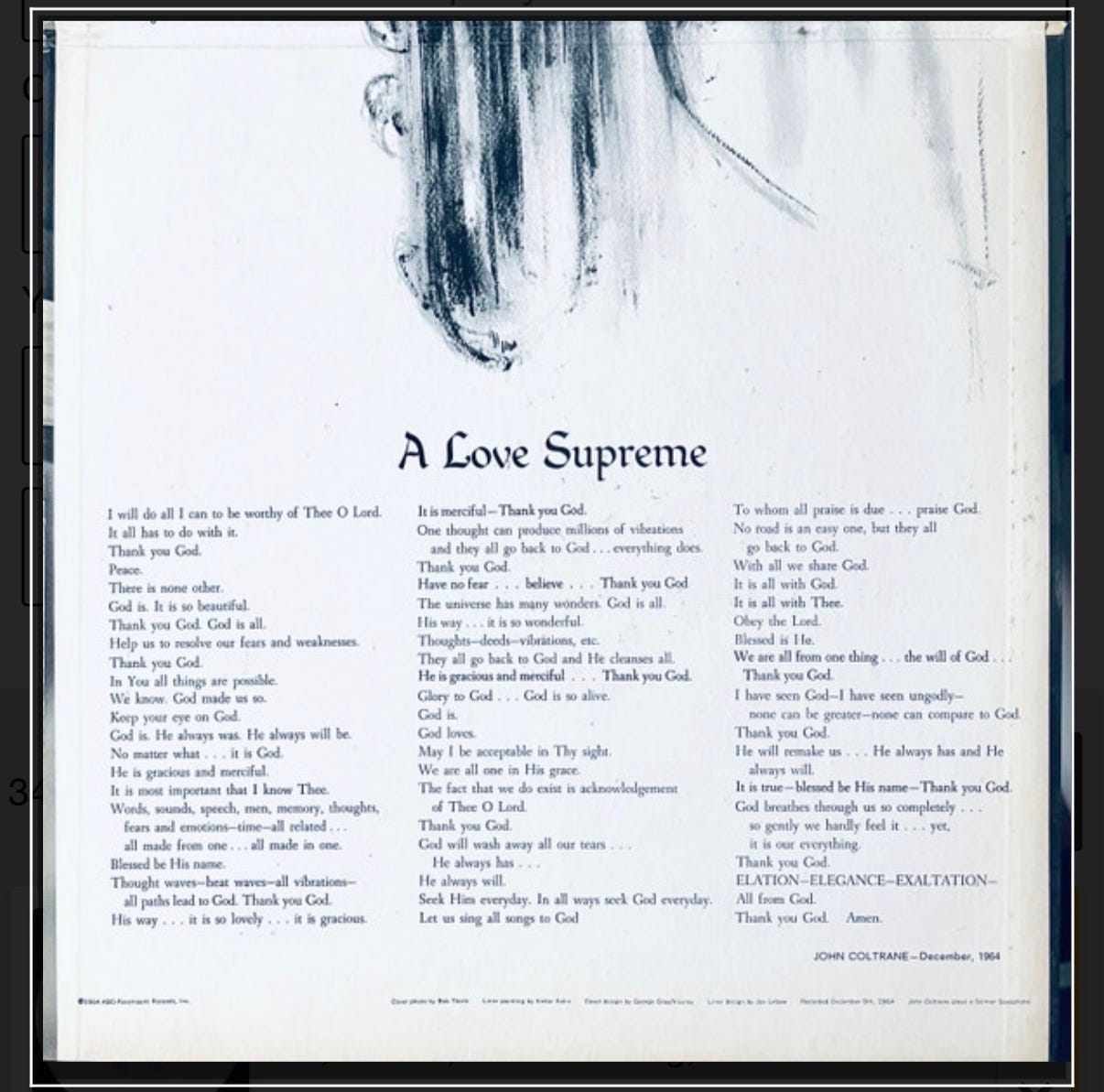
And it isn’t only “Psalm.” It’s the whole record. Each track taps into a deep emotionality, captures it, releases it, and hands it off. The album is a suite, so it was built that way on purpose. My test for the “perfect punk album” posts has always been whether there’s a skippable song, and a suite is the extreme case of passing it. There’s the mantra bass of “Acknowledgement,” the surge of “Resolution,” the sprint of “Pursuance,” and the ode of “Psalm.”
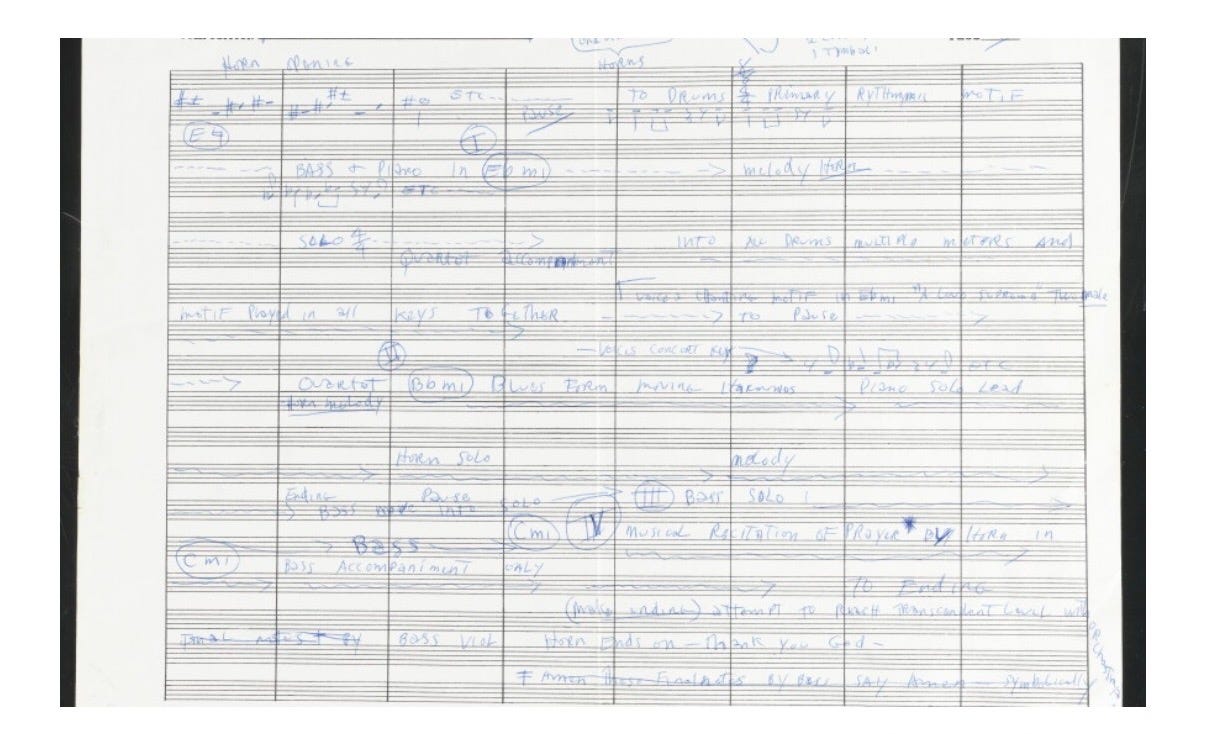
Oh, and by the way, there are vocals, as it happens. A rarity for Coltrane. The famous chant, “a love supreme,” sung over and over on the opening track, “Acknowledgement.” It’s Coltrane himself chanting it, 19 times, overdubbed by himself. Meanwhile, he copies the line on sax, playing it across all 12 keys.
The two of these, the chanted mantra in “Acknowledgement” to the sax poem in “Psalm,” give the record a unique shape I only noticed some time later. It opens with a voice chanting words out loud and closes with a horn reciting words left unspoken.
There is such a journey of emotive energy across the four parts of A Love Supreme. Meditative to restrained to frantic overloading and finally to “Psalm.” And I want to close with the piece, “Psalm,” that I started with in this post. The way the saxophone moves from an inviting call to begin the song to an urgent cathartic release to close it out. The way Jones creates an atmospheric structure of thundering storm clouds on timpani and cymbals, using mallets. It has to go last and close out the suite. I get it.
Eldritch Anisette has a song called “Dissection of Silence.” We have to play it last. Not for pacing, not because it’s the big one, necessarily. But because it rips everything out of us and there’s nothing you can put after it. 30 years ago, we would end up spent, half of us on the ground, half of us in tears. Each time changing which half was which, sometimes it was all of us doing all of it. We weren’t sure exactly how it would be when we played it again, at practice and at our reunion show some 30 years later, but we tried to anticipate whatever would come. It had the same effect. There remains a place we each go to, forever present but not forever tapped, deep within ourselves. We find it, and we pull it out. Or rather, the song, the music, the lyrics, pull it out of us. While each of our songs hit us in their own way, that is just it, they each have their own way. And this one is visceral. The four of us finding a place together through sound.
Thirty years ago I wouldn’t call all this emo. I resisted the label. But, it turns out the thing it names is a man in a studio in December 1964, with three of the best musicians alive alongside him, reaching so deep inside that he reaches everywhere, in order to play a poem to God on a saxophone. Fine. Call it emo. I’ll take it.
As always, thank you for reading.
Share your thoughts, share this with your friend, subscribe for more to your inbox.