

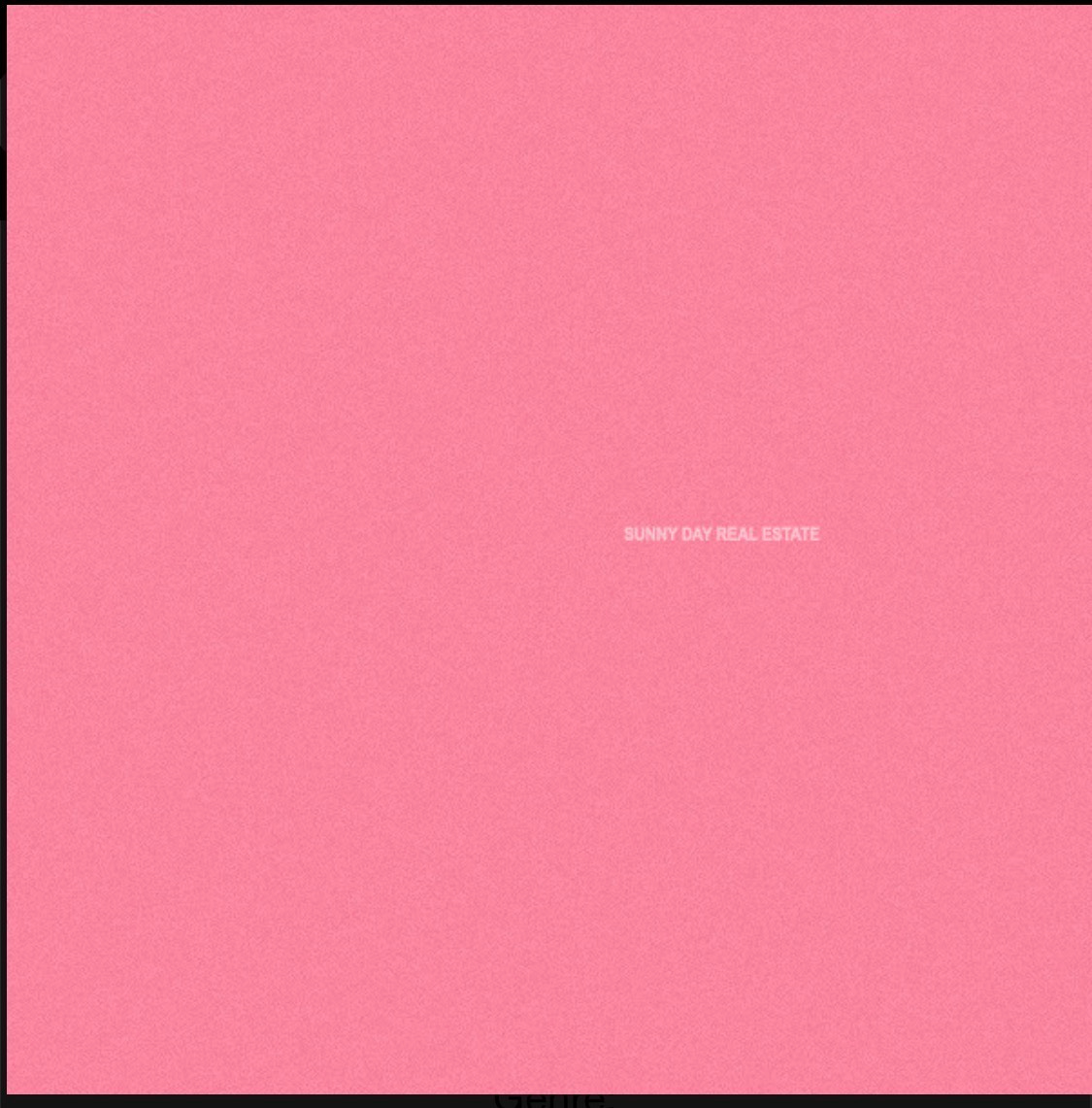
Album: Sunny Day Real Estate (LP2, but we always called it The Pink Album)
Artist: Sunny Day Real Estate
Label: Sub Pop (1995)
Runtime: 9 songs, ~37 minutes
My first jump into this series started with an album relatively close to home and not on streaming services, Spirit Assembly’s Welcome to Lancaster County. This time, I’m going in the opposite direction. But first, a confession:
I didn’t like Sunny Day Real Estate at first. There. I said it. I remember hearing Diary for the first time from my brother. I think it was on a CD in his car, shortly after it was released. And it just didn’t do it for me. I’d love to say, of course, I recognized and loved this genius when I first heard it. But I didn’t. The music felt slow. The production was too clean. And even though I had been listening to vocals from Ian MacKaye’s yells in Minor Threat to Blake Schwarzenbach’s guttural singing in Jawbreaker to the nasally voice of Fat Mike, these vocals were repelled me at first. I didn’t even resonate with the name. Or the album artwork. So I didn’t connect with it. And I know I wasn’t the only one, even if nobody wants to admit that now. If that’s you too, I’m here for you. You’re not alone. Your secret is safe with me.
But I don’t think that was me being slow (even at 14-15 years old), not really. I think these records were just genuinely divergent. It’s hard to remember from here, now that SDRE is carved into the canon and every band cites them, but in the DIY scene of that moment, they were startling. Truly different from everything around them. I didn’t have the ears for it at first listen. And some things are startling enough that it takes a few listens before you even understand what you’re hearing.
I talked in my last post about how our relationship and association with music, or with certain songs, can evolve over time, or pull us back to that one moment, on that one couch, listening to that one song. I said music, as an art form, a communication and emotive device, is not static. It’s also not static in the sense that our own understanding of the music can change. While the song may remain the same, it comes along with us as we live and change. Things we used to love may now seem trite and insignificant. What at first might repel us may soon, or even years later, finally dawn on us and make us play it on repeat. It’s the beauty of music. We can always come back to it and give it another try. Even if we’re not ready for it at first, it’ll be there waiting for us until we are. Regardless of the intensity of the genre, recorded music, as an art form, is patient and forgiving.
That was SDRE for me. After a few weeks of giving it a go, taking a break, and trying again, which, as a 15-year-old growing up in the punk scene, is like a couple of years, it clicked.
So you’d figure Diary is the one I’d write up. It’s the beloved one, the one everybody names. But it doesn’t make this series. This whole “perfect punk album” series runs on one test, as I laid out in my last post: no skippable song. And “Phuerton Skeurto” is a skippable song. I’m sorry. It just is. It might work on Jeremy Enigk’s Return of the Frog Queen (which is great, but who among us wasn’t slightly disappointed upon hearing it that it wasn’t more like SDRE?), but here we’re just waiting for it to pass. A pretty little piano interlude I’ve reached over and skipped more times than I can count. Or thought “great, I have 2 and a half minutes to step away from this record and get back in time for ‘Shadows.’” This album is amazing. Don’t get me wrong. It’s even likely to have their best songs. But one skip, and the record’s out. Otherwise, this isn’t really a test, is it?
The record that passes the test is the one that came after, the one with the pink cover and nothing else on it. No words, no photos, no liner notes, no details, no name. Officially, it’s self-titled; the discographers call it LP2, but my friends and I always just called it The Pink Album, so that’s what I’m calling it here. Nine songs. Everyone earns their spot.
What I didn’t know at the time but only learned years later was how this record was written pressing right up against the band’s imminent collapse. Apparently, some of the quick resolutions in songs may have been due to band dynamics and recording management rather than intentional song craft. And, thankfully, my ears weren’t deceiving me; a lot of what Jeremy sang was just sound, placeholders for lyrics that weren’t written, finished, or recorded. Sub Pop released the record when the band had already called it quits.
But this type of band lifecycle was so common in the punk scene that I knew and grew up in. Bands formed, played, broke up, reformed as new entities, went off in different directions. Often enough with some of the same members. And for the really great bands, which obviously SDRE was, I sometimes think that’s the way it had to be. That amount of energy, that amount of emotional pressure and release, that amount of musical power is near impossible to sustain. It is like a supernova, where the star burns through its massive energy until its weight and gravity make it collapse in on itself, until all that force, all that energy, erupts into a massive explosion. And The Pink Album, in my opinion, captures that moment of convergence and eruption.
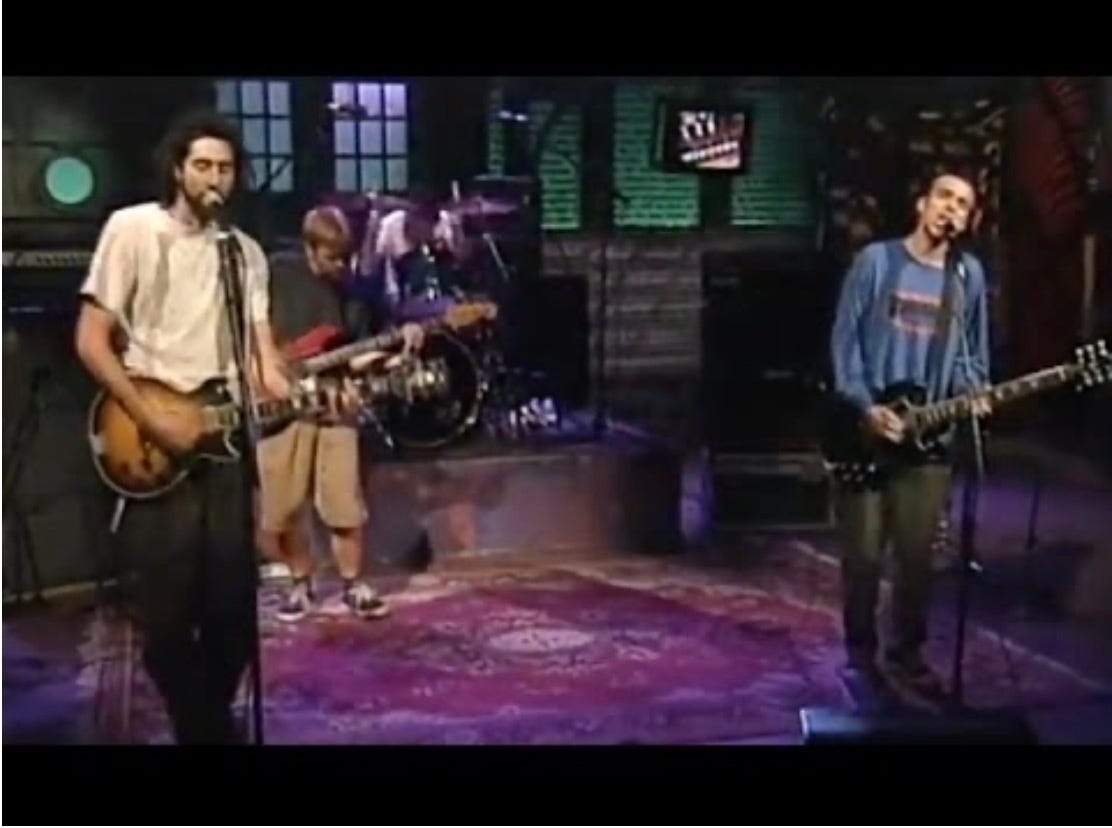
What I heard, knowing none of the backstory, was that there’s a breath to the playing. That’s the best word I have for it. The songs inhale and exhale. There is space in these songs, among the instruments, whereas Diary is much more compact in sound. The drums capture it best, played with precision and skill, but also with ease. And it’s whimsical, which is not a word a common description for SDRE, all that anguish and grandeur, but it’s in there. Melodies that skip where you expect them to trudge. It’s across nearly every bass line. And dare I say it, there is an optimism across the tracks. The major chord progressions help, but it goes beyond these. Across the album, there is a lightness moving through even the heaviest passages, like the band is playing with the songs and not just playing them.
Two foundational elements that give it this air and movement are the songs’ time signatures and William Goldsmith’s drumming. Throughout the album, the band plays with time signatures beyond a standard 4/4. This gives both more space for runs and a swing-like propulsion that links the songs. “Friday,” the lead track, kicks it off in a 6/8 time signature. This gives the song a lilting movement and space. “5/4”, despite its name, also comes in at 6/8, although William plays it differently than most with snare accents on the third quarter note (with the kick on the first and fourth) in the verse’s measures giving it a more unexpected movement before running steady in the choruses (which is actually how he plays “Friday” as well but here it’s more isolated). “Waffle” kicks off in 4/4 and drops to 3/4. “J’Nuh” goes from 9/8 to 6/8 to the bridge, which transitions between measures of 4/4 and 7/8. There’s a lot happening here. And it’s all feel.
Which brings me to Goldsmith. His drums. My goodness. From the time signatures to his syncopation to his fills, he plays with a musicality across the record that sets the bar for everyone. Musicians and listeners alike. I don’t know a single person who can’t help but air drum some of his fills. “Rodeo Jones.” “Red Elephant.” Forget about it. His drum passages are among the most memorable parts of the songs. And with his feel, there is often the sense that he’s riding slightly behind the beat. This opens the sound up immensely, much as John Bonham would. And then there’s his drum tones and sound on this album. The snare pierces, not in an unpleasant way, but rather serves as the lighthouse across the record. Can I call it perfect? I think so.
And the vocals. Ok, so, a lot of the vocals on this record are not words. I couldn’t understand half of what Enigk was singing, and it did not matter even slightly. The feeling came through anyway. The voice works like another instrument, pure melody and urgency, and you stop needing the words to mean anything in particular. (Years later, I learned a lot of it really was gobbledygook, placeholder syllables that never became lyrics.) But then, out of all that wash of melody and yearning, a line will cut through clean and land like a knife. Some of the most emo lines out there. Like “You remind me of a secret, place woe” from “Waffle.” Or “Had a dream that you still loved me / is it my imagination?” from “Theo B.” These lines puncture through, right in the heart, surfacing out of a record where most of the words dissolve into sound.
That’s the texture of the whole album. Mostly, you feel it. The time signatures. The drumming. The vocal melodies and lines. Nate Mendel’s sweeping runs on his bass keep time and set the themes. Occasionally, it tells you exactly what it means, and those moments hit harder because of everything around them that doesn’t. “Emo” is a term I’ve resisted ever since I first heard it (and still find it strange being placed deep within it with my band, Eldritch Anisette), but if SDRE is the quintessential emo band, it’s not only the emotional quality of the lyrics or melodies, but it’s the feel that captures the entire sound demonstrated across this album, the way the band writes and plays. (Hint: remember this in future posts when I talk about connections between punk and jazz! *update: that post is now live, “A Love Supreme is an Emo Record.”)
The song that illustrates what this record does is “Waffle.” I threw it on again for this, really listened, and it’s even more stunning than I remembered. It isn’t a single build with a single payoff. It’s build, crest, gone. Over and over, each peak lasting a few seconds and dropping away before you can hold it, the cycle tightening as the song goes. The crests get bigger. That whole back third is a dense run of the biggest ones, stacked close together, each still vanishing fast.
And then, at 4:09, it finally breaks all the way open. The biggest lift in the song, and the only one that doesn’t snap back. It resolves, and it’s just gone. Song’s over. To me, that’s the payoff the whole thing was climbing toward. But I get that for some people it resolves so fast it barely registers as a resolution at all, and the song ends feeling unresolved. It holds both. Regardless, the focus of the song is the rising tension. The payoff is deliberately too quick to be the point, because the point is the tension.
Then it’s on to the next song before you’ve even caught your breath. Except here’s what tells you somebody thought about the order of these songs: the next track is “8,” and it opens with about 72 seconds of quiet before it fully takes off. The album breathes for you. It knocks your wind out, and “8” gives it back. That’s a record thinking in album time, not just song time. Similar thing I was talking about with Spirit Assembly, in my last post, actually. Say your piece, trust people to keep up.
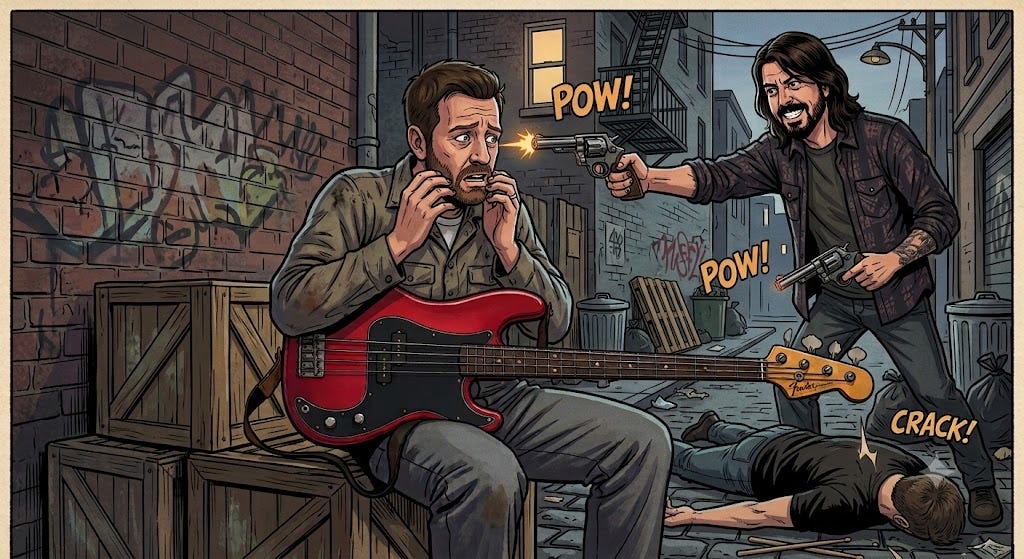
Now. I have to interrupt this discussion of SDRE and The Pink Album because after this record was released, a crime occurred, and I have to talk about it. Two crimes, in fact. Let me set it up properly. The rhythm section on this record is Nate Mendel on bass and William Goldsmith on drums, and they are extraordinary. One thing this album does is put on clear display what a strong rhythm section can do for a record and a band. I can point to every song. But go listen to “Rodeo Jones.” Or “Red Elephant.” Or “Waffle.” Or “Iscarabaid.” Listen to the way they get locked into one another and just drive the entire song on both melody and rhythm. It’s hard to do both, and yet they’re destroying. Nobody can listen to those songs, “Rodeo Jones” especially, and think these are background players. And, as we all know, Dave Grohl heard them and was like, they have to be in my new band, Foo Fighters. And so, they both join. Fantastic. Yes, of course. Greatness recognizing greatness. And then, the crimes occur, one quick and dirty. The second prolonged and ongoing. Goldsmith got taken out back and shot: he spent weeks recording the drums for The Colour and the Shape (Foo Fighters’ first album recorded as a full band) and Grohl went back and quietly re-recorded nearly all of them himself. Goldsmith found out secondhand. From Nate, as it happens. His name survives on a couple of tracks. He left, and who could blame him? That part’s well-documented. But Nate stayed, and this is where the second crime occurred and is still ongoing: Nate got muzzled. He’s being held hostage. Still there, decades now, playing competent arena rock root notes, while somewhere in him lives the guy who played “Rodeo Jones” or “Theo B.” Dave, come on. Don’t be threatened. I was lucky enough to have toured the festival circuits in Europe (and New Jersey) with Foo Fighters back with Boysetsfire some years back, and I fell for the Foo Fighters then: they’re great guys, and it’s great music. And still. Who can listen to “Rodeo Jones” and go, yeah, sound like that never again? Who can listen to The Pink Album, do the right thing by recruiting these guys for your band, and then erase one literally and the other metaphorically? Dave, you knew what you were getting. You can be the frontman and still have them shine. It may be too late for William, but not for Nate. Liberate Nate!
Ok. Back to the record…
I keep thinking about what The Pink Album does to you, and it’s this, it keeps handing you things you can’t keep. The gorgeous line that surfaces once and dissolves back. The build that crests and vanishes before your hand closes around it. The payoff at 4:09 that resolves and is instantly over. Even the words, half of them were never words at all, just sounds standing in for lyrics that never came. The drum fills that come and go, making each song. Everything on this record is fleeting on purpose. You just get to be there while it happens, and then it’s gone, and you put it on again. And the fact that this was written while the band was imploding and released after they called it quits, emphasizes this even more.
Which, if you read the first thing I ever posted here, might sound familiar. Music is the art you can’t hold. This album knows that about itself better than almost any record I own. It hands you the moment and takes it back in the same motion. Startling then. Perfect now. Perfect then too. I’m just glad I finally understood SDRE well enough in time before this album came out, so I could enjoy it for over three decades and counting.
That’s the second entry in my perfect punk album series. As a recap:
#1: Spirit Assembly’s Welcome to Lancaster County
#2: Sunny Day Real Estate’s s/t (aka The Pink Album)
#3: stay tuned…!